Before you say yes to a late pregnancy scan, ask yourself this
I’ve seen this happen many times. You go in for a growth scan at 36, 38, or 40 weeks. You feel good, your baby has been moving and you are not worried.
Then the sonographer says a number out loud. “A bit small.” “A bit big.” “Fluid’s a little low.” And right away, something changes: you stops trusting your own body and baby an doubts are put into your mind, and your heart to, because you love your baby so much, and you want to keep them safe.
I’ve sat with families after this happens, and here’s what I keep seeing: the number on the screen and the baby who is actually born often don’t match. The “small” baby is born a normal size. The “big” baby weighs seven pounds. The “low fluid” baby has a totally normal cord and placenta.
But by then, it’s too late: the induction is already booked, he plan has already changed, fear got there first.
This isn’t me saying scans are bad. It’s me saying you deserve more than “it’s just protocol” before you say yes to one.
What does a growth scan actually check?
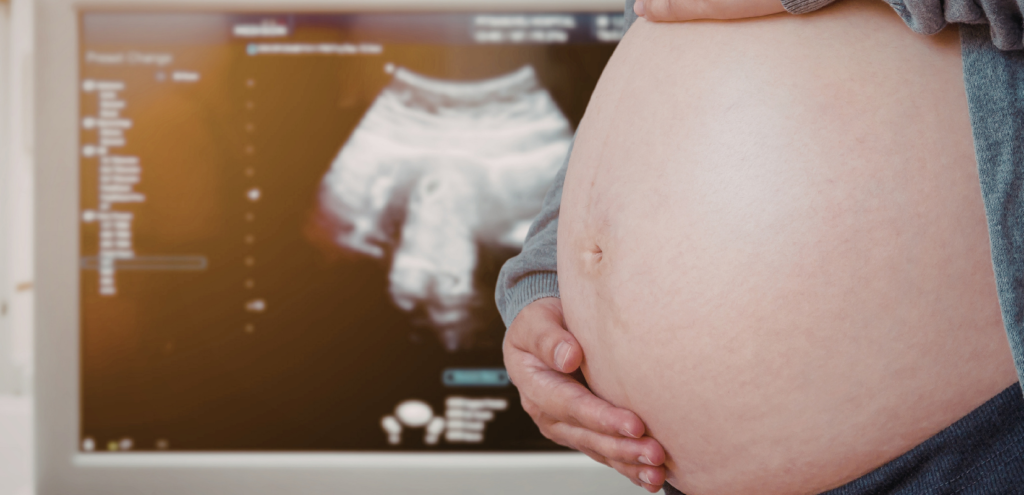
A growth scan, sometimes called a third trimester scan, measures your baby’s head, tummy, and thigh bone to estimate their weight. It also checks your amniotic fluid levels and looks at how your placenta is working. The sonographer uses these measurements to plot your baby on a growth chart. It sounds thorough. But every part of it is an estimate, not an exact reading. The measurements accuracy depends on the baby’s position in your womb and how the sonographer is able to capture them
Is a growth scan in late pregnancy accurate?
 A late scan gives one measurement, taken at one moment, by one person looking at a picture. It is a guess, not a guarantee.
And the research backs this up: the biggest study on this, called the IRIS study, followed over 13,000 women in the Netherlands. Half were given routine scans late in pregnancy, half were not; the scans found more babies who measured small but the scans did not lower the number of babies who had serious problems: more scanning did not mean safer babies.
A study in Oxford found something similar. Even worse, most of the babies who did have serious problems had been given the all clear at their 36-week scan. So even when a scan says “normal,” that’s not a promise that everything is fine.
Another study looked at scans trying to spot big babies: it found scans are often wrong about this too. And being told wrongly that your baby is big can lead to a lot of worry, and often an induction, for a baby who turns out to be a totally normal size.
Even the group that writes the rules on ultrasound use says this plainly:
The International Society of Ultrasound in Obstetrics and Gynaecology looked at the evidence in 2024, they said there is no good evidence that giving every low-risk woman a routine late scan actually helps mums or babies. That is the group that supports ultrasound, saying the proof just isn’t there.
And the newest information, from Australia in 2026, followed over 9,000 births: Scanning went way up, from about a third of women to over eighty percent BUT stillbirth rates didn’t improve, Low Apgar scores (Apgar score: a quick check at 1 and 5 minutes after birth, scoring heart rate, breathing, tone, reflexes, and colour out of 10. Low means baby needed a bit more help adjusting at birth.) didn’t improve, NICU outcomes didn’t improve. What did go up was induction, caesarean births, and cascade of intervention.
So the pattern keeps showing up: more scanning but the same outcomes for babies. and you are labeled HIGH RISK… this is a blog I wrote about this and how this label it change your path
The question that usually gets skipped
In a busy appointment, no one usually asks you the question that matters most: what would this result actually change for me?
Would it change anything about your plan? Would it help you feel calmer? Or would it just hand you a worry you didn’t have before, without changing what you’d actually do next?
There’s no wrong answer here. But it’s much easier to know your answer before the appointment, not after a number is already sitting in the room with you.
What you already know
 You’ve spent months with this baby: you know their quiet times and their busy times, you’d likely notice, in your own body, if something really felt different.
That inner knowing, your intuition, your insitinct is THE information, IT IS THE MOST IMPORTANT KNOWLEDGE YOU HAVE. this become strong when you foster connection with yourself and your baby
So before your next scan, a few honest questions worth asking yourself:
What is my gut already telling me about this pregnancy, right now?
If I got a worrying result, would I want more checks, or would I want to wait and watch? Do I know which one I’d actually choose?
Am I saying yes to this scan because I have a real reason, or because saying no feels too scary?
What would actually help me feel settled, more information, a chat with someone I trust, or just a bit more time?
There’s no single right answer. What matters is that the answer is yours, not one handed to you by a pathway you never got to question.
Can you decline a growth scan?
Yes.
And the flip side is true too. If you feel called to have an extra scan, for your own peace of mind, or a second opinion, you can book one privately. Either choice is valid. What matters is that you’re choosing it, not pushed into do something.
Whichever way you lean, it’s worth running it through the same questions from above. What would the result actually change? Are you saying yes for a real reason, or because no feels too scary? What would actually help you feel settled? Keep those in mind, and keep in mind where saying yes might take you, the checks, the appointments, the plan, before you decide either way.
Private scan provider I trust:
Discovery ultrasound in Battle, East Sussex
The scanning room in Shoreham, and Haywards Heath
Why continuity of care changes this
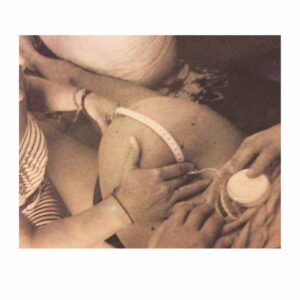 A lot of what makes scan decisions feel rushed or frightening isn’t the scan itself, it’s making that decision with someone who doesn’t know you. A different face each time, a quick read of your notes, following protocols and not having care based on your own unique pregnancy and needs.
Continuity of care means having the same midwife with you throughout, someone who already knows your pregnancy, your history, and you. That changes the conversation, there’s time to talk a result through properly, weigh it against everything else that’s true about your pregnancy, and make decisions coning form trusts not fear and coercion.
If that’s the kind of support you’re looking for, I’d love to talk with you about it, here is how I work.
Where to go for more
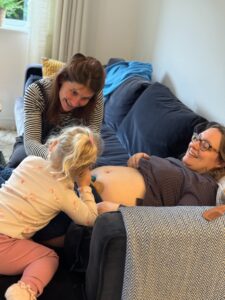
If you want to read more about the studies, Dr Sara Wickham has written a detailed look at the research here: Late pregnancy ultrasound: what’s the evidence?
Studies referenced:
- Henrichs J, et al. (2019). The IRIS study. BMJ.
- Aderoba AK, et al. (2023). Oxfordshire cohort study on routine 35–36 week scans. BJOG.
- D’Alberti E, et al. (2026). Outcomes following a “normal” 36-week scan. BJOG.
- Caradeux J, et al. (2024). Systematic review of third-trimester scan accuracy for growth restriction. AJOG MFM.
- Emam L, et al. (2025). Review of international guidelines on late pregnancy ultrasound. Archives of Gynecology and Obstetrics.
- Khalil A, et al. (2024). ISUOG practice guidelines on fetal growth assessment. Ultrasound in Obstetrics & Gynecology.
- Lopian M, et al. (2026). Accuracy of third-trimester scans for detecting large babies. American Journal of Obstetrics and Gynecology.
- Kumar S, et al. (2026). Real-world outcomes following routine third-trimester scanning in Australia. Australian and New Zealand Journal of Obstetrics and Gynaecology.