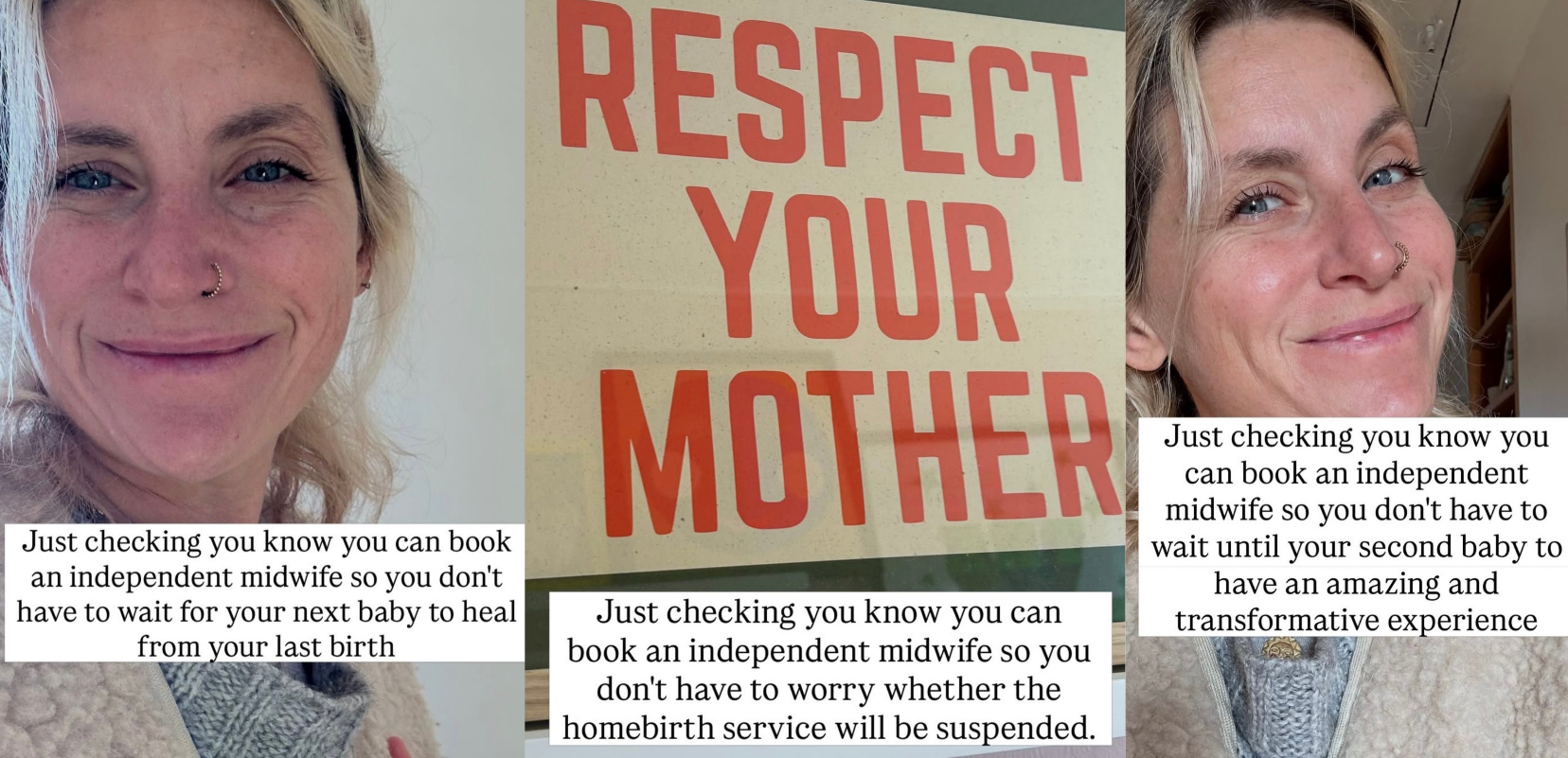
What a new 2026 study found and why nobody is talking about it
If you’ve been told you’re high-risk, I want you to read this.
Not because I want to scare you. But because you deserve to know what the research actually says, and right now, most women don’t.
A major integrative review just published in Midwifery Journal looked at 25 years of antenatal risk assessment and classification in the UK. What it found was something many independent midwives have known for a long time but rarely get to say out loud.
More monitoring and more intervention is not making birth safer. In many cases, it is doing the opposite.
The numbers first
Since 2012 in the UK:
Spontaneous labour has dropped from 64% to 43%. Inductions have risen from 21% to 33%. Caesarean births have gone from 25% to 40%.
And here is the part that should make us all stop and think. Stillbirth targets set by the government in 2015 have been missed. Maternal death outcomes are not improving. We are doing more. A lot more. And it is not working.
So what is actually going on?
The review looked at how women get classified as low or high-risk during pregnancy, and what happens to them once that label is applied.
What it found is that most antenatal risk assessments don’t actually improve outcomes. The tests are often inconclusive. When something gets flagged, the treatment options are frequently limited. And this is the part that really matters: the risks of intervening are almost never weighed up against the risks of not intervening.
Nobody is sitting down with you and saying: here is the risk we’re worried about, here is how likely it actually is, here is what the intervention involves, and here is what the intervention itself might cause. That conversation is rarely happening.
The review makes a striking point. Risk management only genuinely benefits a small minority of pregnancies. For most healthy women, it is intervention applied where there is no real risk, but with very real consequences. You are being assessed against population-level data that may have very little relevance to your specific situation, your history, your body, or what you actually want.
The system classifies you. And then it treats you according to the classification, not according to you.
What the label does to you
Being told you’re high-risk doesn’t just change your care. It changes how you feel about being pregnant, and how much you trust your own body.
The research shows women who receive a high-risk label have more anxiety, lower wellbeing scores, less joy in pregnancy, and less confidence in their ability to birth. Some develop tokophobia, a genuine fear of birth, not because of anything physically wrong, but as a direct result of the label and the way it was communicated.
There is also a significant problem with how risk is communicated. Women are rarely told the margin of error in a test, the actual likelihood of a poor outcome, or what risks come with the recommended intervention. The balance of information is consistently weighted towards compliance, not informed choice.
In one audit, 32% of women referred to obstetric-led care were wrongly classified as high-risk to begin with. Of those women, only 2% were ever referred back to midwifery-led care. Once that label lands, it tends to stick, even when the original concern has resolved or was never well founded.
Only 1 in 24 women attending a specialist antenatal clinic said they felt fully informed about why they were there. Some women who asked questions or pushed back were told things like “you’re at risk of harming your baby.”
That is not informed consent. That is fear being used to manage behaviour. And it has no place in maternity care.
Big babies, fetal movement, and induction
These are the things I hear about most from the women who come to me, so let’s be direct about what the evidence actually says.
Large-for-gestational-age diagnosis has a 15% margin of error and is wrong 60% of the time. That means more than half of the women told their baby is measuring big and steered towards induction or caesarean are receiving that recommendation on the basis of an incorrect diagnosis.
When those inductions and caesareans go ahead anyway, outcomes for mother and baby don’t improve. What does increase is the rate of labour complications, longer recovery times, NICU admissions, and in future pregnancies a significantly higher risk of uterine rupture, placental problems and unexplained stillbirth. The intervention carries its own serious risks, and those risks are rarely laid out clearly at the time.
The AFFIRM trial tested increased fetal movement monitoring specifically. The result? It did not reduce stillbirth. It did increase inductions, caesareans, and NICU admissions. More surveillance produced more intervention, not better outcomes.
And then there is induction itself, which I think deserves more honesty than it usually gets.
When labour starts on its own, your body does something extraordinary. Your pelvic ligaments soften and open. Your baby’s head moulds and positions in response to your pelvis. Your hormones build in a precise sequence that cannot be replicated artificially. Spontaneous labour also has a protective effect on your baby’s lungs, gut, and immune system that we are still learning more about.
Induction skips all of that. It is sometimes the right decision. But the physiological cost of bypassing spontaneous labour onset is almost never part of the conversation when induction is being recommended, and it absolutely should be.
BMI: a population tool being used on individuals
BMI was created by a statistician in the 19th century to track trends across large populations. It was never designed, tested, or validated as a tool for assessing individual risk in pregnancy.
And yet it is routinely used to classify women as high-risk, restrict their birth setting options, and send the message, often without quite saying it, that their body is a problem requiring additional management.
The research shows marginal outcome differences at best when BMI is used this way. What it reliably produces is shame, anxiety, reduced confidence, and women being directed away from care that would have served them far better. It also disproportionately affects women from certain ethnic backgrounds, where the standard BMI thresholds have even less clinical relevance.
The thing nobody wants to say out loud
A significant amount of risk assessment in maternity care is not primarily being done for you.
It is being done to protect the trust from litigation. Tests are presented as routine rather than offered as a choice. Options are framed in ways that suit the protocol, not the woman. Consent is assumed rather than genuinely sought.
The review describes this as defensive practice, and it is widespread. Midwives working under enormous pressure, in a system shaped by fear of poor outcomes and legal consequences, end up offering care that protects the institution rather than genuinely serving the individual woman in front of them.
This is not a criticism of individual midwives. It is a description of a system that has prioritised risk management over relationship, and surveillance over trust. And the women sitting in those appointments are the ones absorbing the consequences.
What you actually lose when you’re labelled high-risk
When you are classified as high-risk, you typically lose access to midwifery-led continuity of care. And that matters enormously, because the evidence for what continuity of midwifery care delivers is some of the strongest in maternity research.
The Cochrane review on midwifery continuity of care found: fewer caesareans, fewer instrumental births, higher rates of spontaneous labour, more positive birth experiences, lower rates of preterm birth, lower use of epidurals, and significantly lower stillbirth rates for women in deprived and diverse communities.
These are not small differences. And the system is routinely classifying women out of access to this care, based on risk assessments that frequently lack a clear evidence base.
A new tool worth knowing about
There is currently a new NHS risk assessment tool being rolled out called the Tommy’s Clinical Decision Support Tool. It uses an algorithm to process your details, age, BMI, blood results, and other factors, and then generates a risk score and a recommended care pathway.
The intention is to make risk assessment more personalised. But the review raises a concern that I think is worth understanding. The tool appears to assume that once a risk is identified, you will follow the recommended pathway. It does not clearly separate the process of identifying a risk from the process of deciding what to do about it. Your values, your questions, and your right to weigh the evidence for yourself are not built into the model.
A more sophisticated tool. The same underlying assumptions.
What I do

I’m Virginia, an independent midwife based in Seaford covering Sussex, Surrey and Kent.
I built Rise Midwives around one belief: that less is more, and that the woman and family in front of me always comes first.
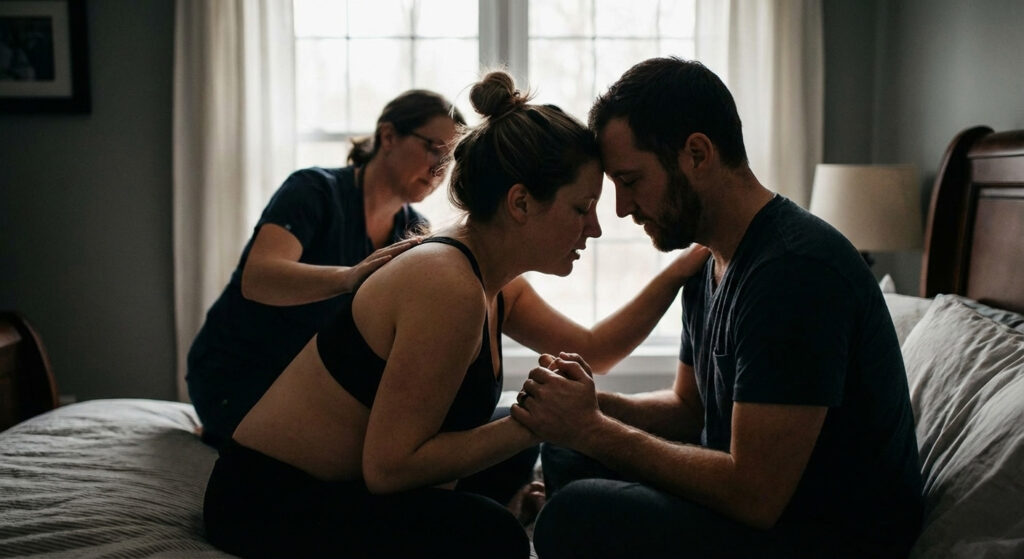
When you work with me, risk is never a label. It is a conversation we have together, grounded in the actual evidence, your history, your values, and what matters to you. I know you before labour begins. I am there when it happens. And I am with you in the weeks that follow.
I specialise in physiological birth, homebirth, VBAC and HBAC. I’m passionate in supporting women who have been told their birth is complicated, and I bring both the clinical expertise and the deep belief that your body is not the problem.
Nothing gets in the way of your birth without very good reason. That is not a service. That is a relationship. THIS IS WAHT CONTINUTY OF CARE GIVES YOU
You deserve care built around you, not around the system’s fears.
Ask yourself: how do you choose care that actually puts you at the centre?
Book a discovery call with me to find out what a different model of care looks like.