If you’re birthing within the NHS, you’re very likely to be offered a sweep or an induction at some point. That conversation often comes when you’re tired, excited and longing to meet your baby, which is the hardest moment to start thinking things through. Your due date gets close and suddenly everyone has a tip to get things moving, all of them to avoid induction. So let’s look at it now, while you still have time.
This post is about induction offered simply because you’ve gone past your due date, in a healthy pregnancy with no other concerns. When there’s a medical reason, such as raised blood pressure, your waters breaking without labour starting, or concerns about your baby’s growth or wellbeing, the balance is different, and that’s a conversation to have about your own situation.
Induction has its place, and in some situations, but when the only reason is going past your due date, you deserve to choose it, or to choose to wait, knowing the full picture.
Your baby plays a part in starting labour
Labour is still a mystery that unfolds when you and your baby are both ready. As Dr Rachel Reed explains in her article on induction for prolonged pregnancy, the baby initiates labour: in the final days, your baby’s cortisol matures their lungs and vital organs, and your body and your baby prepare together for birth, breastfeeding and bonding. When labour is started for you, induction often interrupts this before these changes have happened. You can read more about this in my post on what physiological birth is.
That’s why it matters so much who, or what, starts your labour.
There’s no grey area
Labour either begins on its own, when your body and your baby are ready, or it’s brought on by something done to start it. Induction is anything aimed at bringing labour on sooner: medication, mechanical methods, membrane sweeps, and even holistic therapies. Sweeps are sometimes left out of induction figures, but NICE classifies a sweep as a method of induction. Underneath all of these sits a belief that your body and your baby can’t always be trusted to choose the time.
Natural doesn’t mean harmless either. Gentler methods still aim to bring labour on before your baby is ready, and because they’re seen as natural, they’re often offered with very little information.
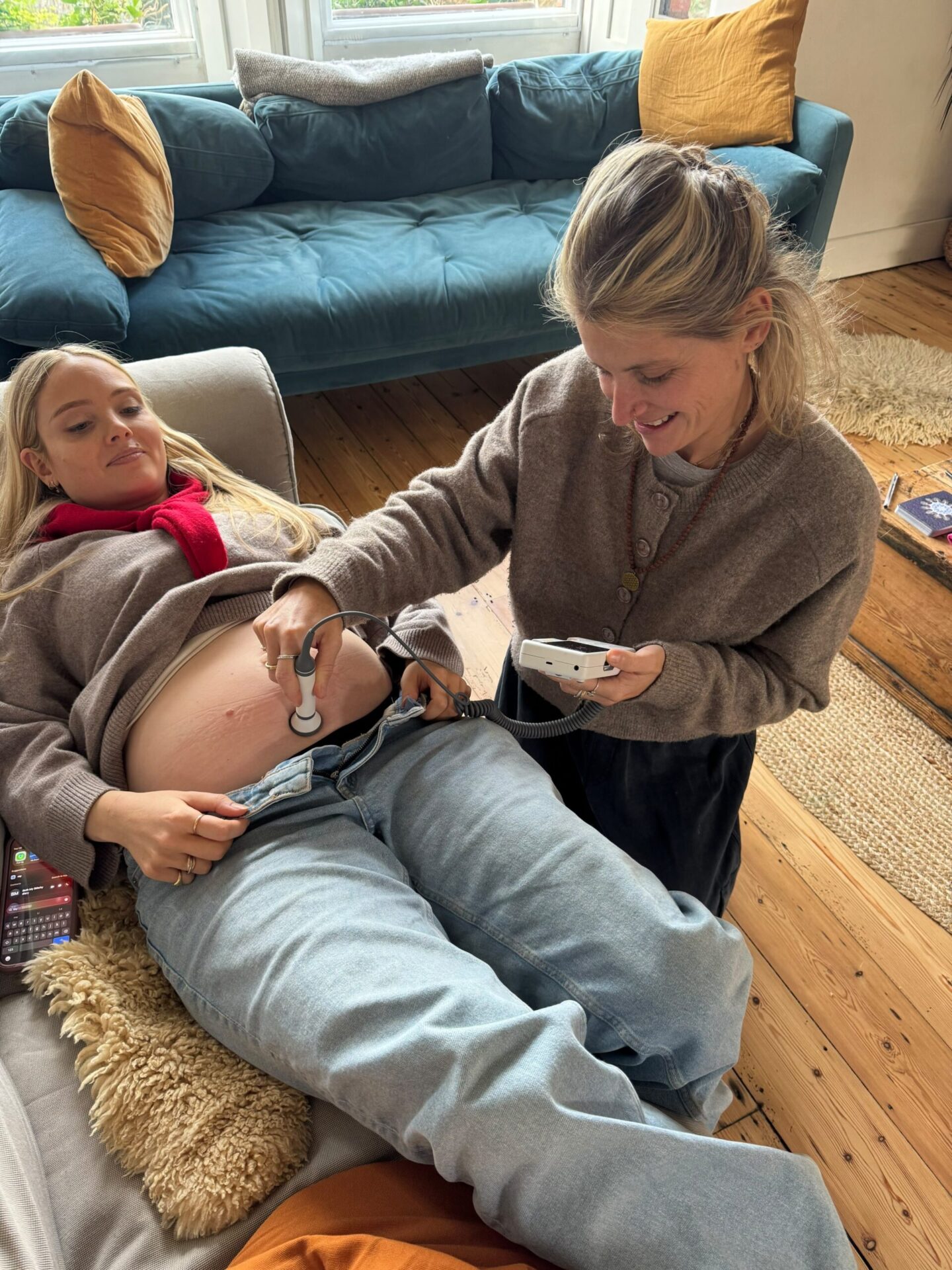
For most women in the NHS, the first of these you’ll be offered is a membrane sweep, often at your 39-week appointment, and it’s usually described as just a little help to get things going.
The membrane sweep: often the first step
A sweep is an internal examination during which your midwife or doctor sweeps a finger around the inside of your cervix to separate the membranes from it. This releases prostaglandins, which may start labour. Because it happens at a routine appointment, it can feel like a small thing, but it is a way of starting labour before your body and your baby have done so, and you can say yes or no each time it’s offered.
Sweeps also used to come much later. As Dr Sara Wickham points out in her review of the 2021 NICE guideline on inducing labour, sweeps were previously offered at 40 or 41 weeks for a first baby, or 41 weeks for later babies. In 2021 this moved to routinely from 39 weeks, whether or not it’s your first baby, even though the same guidance calls for more research on the timing and frequency of sweeps.
Does a membrane sweep work?
The Cochrane review of 44 studies found that sweeping appears to be effective in promoting labour, but that this did not, overall, lead to more births without help, and the evidence was of low certainty. In the review, around 3 in 10 women without a sweep went on to have their labour induced, compared with around 2 in 10 women who had a sweep. Put another way, around 8 women would need to have a sweep for 1 woman to go into labour on her own and not need an induction.
How strong is this evidence?
It’s worth knowing how solid these findings are, because a sweep is often offered as if it were simply helpful. The Cochrane reviewers rated the evidence as low certainty, which means the real effect could be quite different from what the studies found. A sweep can’t be done “blind”: the women and the midwives always knew who had a sweep and who didn’t, and that can shape what happens next, from how early tightenings are interpreted to when the next step is offered. The studies compared sweeping with no treatment or a pretend examination, only three of them asked women how they felt about it, and of the seven studies that reported their funding, two were funded by pharmaceutical companies.
So when you hear that a sweep “helps”, the honest answer is that it may help a little, for some women, and we don’t really know how much.
Membrane sweep pros and cons
You should be told beforehand that pain, discomfort and vaginal bleeding are possible. Many women also have days of irregular tightenings that wear them out without moving into established labour. Sara Wickham notes that women are not usually told about the possibility of the waters breaking by accident, or about infection risk. If your waters break before labour starts, the conversation moves quickly to formal induction. On the other side, a sweep can be done at a routine appointment, and for some women it’s enough to avoid a hospital induction. Only you can weigh that balance.
If a sweep doesn’t start your labour, the next conversation is usually about a formal induction date.
If you’re offered an induction at 41 weeks
NICE recommends discussing induction from 41 weeks because the chance of stillbirth, while small, rises slowly as pregnancy continues, and the large trials found that induction at 41 weeks can lower that already small risk. How the numbers are described makes a huge difference, so ask for them as “how many in 10,000” rather than “double the risk”.
A formal induction usually happens in hospital, in up to three steps: softening your cervix with a pessary, gel, tablet or balloon, then breaking your waters, then a syntocinon drip to start contractions. Each step is only offered if the one before hasn’t started labour, and the whole process can take hours or several days. You can choose to go ahead, to wait, or to decide one step at a time.
If you’d like to understand this more deeply, Rachel Reed’s step-by-step guide to induction explains what happens at each stage and how it differs from labour that starts on its own. It is worth reading before any induction appointment. Sara Wickham’s Ten things I wish every woman knew about induction of labour is an honest place to start.
The week-by-week numbers, what each step involves and your options if you wait are all in my free guide, so here I want to focus on what this can mean for you.
What induction for going past your due date can mean for you
- Your baby may arrive before they’re fully ready.
- You’re more likely to need further medical help, and one intervention often leads to the next.
- An experience that leaves you traumatised can affect your next pregnancy and your whole journey as a new parent.
- Being told your body can’t start labour on its own can shake the confidence you carry into birth.
A new study, the Birth Experience Study, listened to nearly 8,000 women. Those who were induced were almost twice as likely to describe their birth as traumatic, and more likely to regret it or keep reliving it. These are associations rather than proof, but they show how much the way a birth begins can shape how a woman feels about it long afterwards.
This matters more than ever. In England in 2024 to 2025, NHS figures show that only 42% of labours started on their own, 30% were induced, and 45% of births were by caesarean.
What I’d steer you away from
- Relying on other people’s birth stories to make your decision. Every story shared online is real and valid, but it belongs to that woman’s body and circumstances. Your choice deserves to rest on your own body, your own baby and the evidence.
- Waiting until induction is on the table to learn about it. It’s much easier to explore this earlier in pregnancy, when you have the time and headspace to take in the information calmly, rather than at 40 weeks, when you’re tired and longing to meet your baby.
What I encourage instead
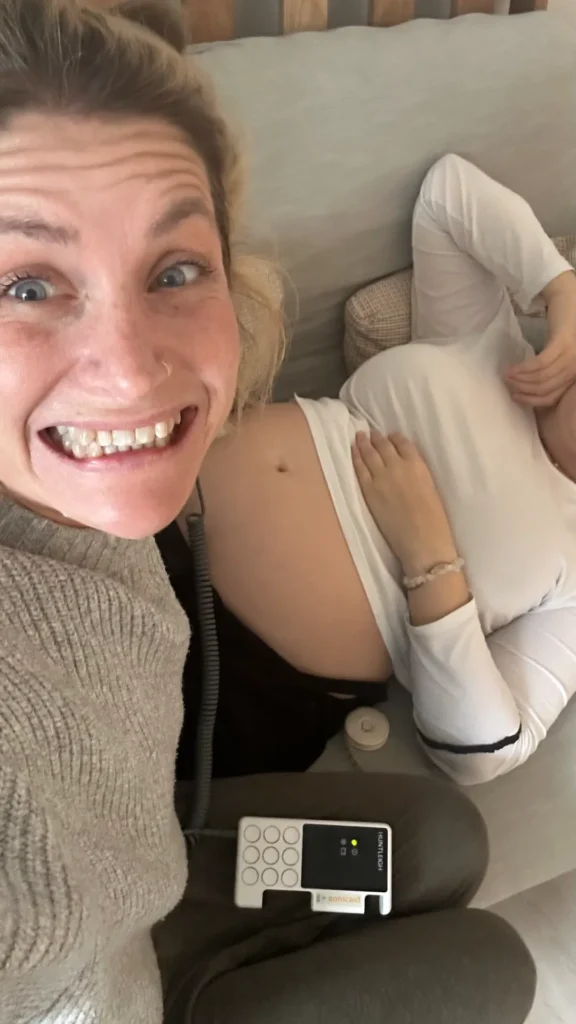
- Work with someone who can hold you through this, who doesn’t see you as a bomb ready to explode past 40 weeks, and build trust with them over your pregnancy, so that when the conversation comes, you’re not facing it alone.
- Read Sara Wickham‘s In Your Own Time and Rachel Reed‘s Reclaiming Childbirth as a Rite of Passage while you can take in the information calmly, rather than under pressure.
- Connect with your baby from before they’re in your belly. I mean that. The trust you build with them, and with yourself, is what will guide you towards the right choices for you.
Rising rates of induction for going past your due date reflect a failure to trust women’s bodies and to offer the right birth environments. I do things differently: I trust that you can do this, and I help you build that trust within yourself.
Further reading
- Dr Sara Wickham, The 2021 NICE guideline on inducing labour
- Dr Sara Wickham, Ten things I wish every woman knew about induction of labour (AIMS)
- Dr Sara Wickham, In Your Own Time and Inducing Labour: Making Informed Decisions, both available via sarawickham.com
- Dr Rachel Reed, Induction of labour for prolonged pregnancy
- Dr Rachel Reed, Induction: a step by step guide
- Dr Rachel Reed, Why Induction Matters and Reclaiming Childbirth as a Rite of Passage, via rachelreed.website
Get the numbers in my free guide
Going Past Your Due Date takes you through:
- what your due date really means and when babies actually arrive
- the real risk, week by week, drawn as pictures you can understand at a glance
- what the big induction trials found
- what induction involves, step by step
- your choices if you go ahead, and your options if you wait
- questions to take to your appointments, with space to write your own decision
Ready to own your choices?
If you’re earlier in pregnancy, book a free exploration call and we can start building that trust together. If you’re closer to your due date and feeling the pressure, a Power Hour gives you time to go through the evidence for your own situation.
Your body. Your baby. Your birth.