Notes from a room that felt like home
I sat in a room full of midwives last week, at the Association of Radical Midwives’ 50th anniversary conference. I felt so much Joy!!! The sense of being recognised by people who get it, that kind of resonance you don’t feel very often, surrounded by women who’ve spent decades fighting for something I know in my bones. I’M NOT ALONE IN THIS!
And underneath all of that A confirmation that the path I’m walking with Rise Midwives, the one that feels lonely some days, like I’m swimming against a current nobody else seems to notice, is the right one. I needed that, more than I realised.
Fifty years of going to the root
ARM started in 1976, founded by a handful of midwives, they called themselves radical, but that word was never about extremes, it was about going to the root of things.
And the root of midwifery is relationship. Trust. The courage to stand by a woman even when it costs you something to do it.
Their mission back then was simple: midwives practising on their own responsibility.
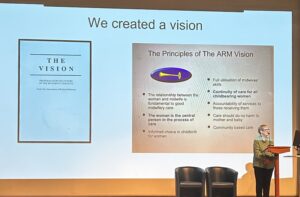 Continuity of care, more home births, fewer interventions, and women at the centre of every decision made about their own bodies and their own babies.
I felt the weight of that history sitting in that room, and the warmth of it too. Two founding members opened the day remembering those early years, a small study group of student midwives dreaming of practising based on “the vision” long before anyone gave them permission to. That tiny beginning grew into a published vision for reforming UK maternity services, lobbying that reached government committees, and a way of thinking about birth that’s shaped the conversation ever since.
Fifty years later, we’re asking the same questions. Somehow more urgently than before, if anything. And the same answer keeps turning up, again and again, drawn from practice, from research, and from actually listening to women.
What I heard in that room
Across the day, midwives and researchers spoke about the physiology of birth, what the body actually does in labour and what it needs from the people around it. Dr Melanie Jackson wisdon, on ideology of physiological birth war, humour (melaniethemidwife.com), Prof Soo Downe (University of Lancashire) shared decades of research on what the evidence tells us about midwifery’s impact on women and babies. Lola Ornato (emilola.co.uk) spoke about racism in maternity care and the deeper work still needed so every woman is truly seen. Leah Hazard, NHS midwife and bestselling author (leahhazard.co.uk), spoke about the courage it takes to speak up for your profession in a climate that doesn’t always welcome it. Amifa Kebe-Kamara (@wecanbirth.today) spoke about home birth, and what it gives back to the families who choose it, and to the midwives who attend them. And Kemi Johnson (kemibirthjoyjohnson.com), THE QUEEN, spoke about staying connected to what matters even when the system you work in makes that hard.
Different speakers, decades apart in experience. But the same thread kept running through everything: women and midwives deserve a kind of birth that’s rooted in trust, not fear.
Integrity, authenticity, courage
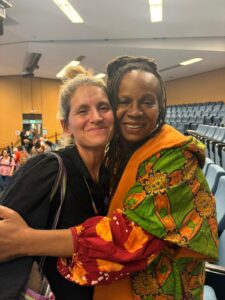
Kemi Johnson, a beautiful soul, the truest, a birthworker, a midwife but not allowed to call herself as such anymore, because she left the NMC. She spoke about what it actually takes to keep the heart of midwifery alive inside systems that don’t always make space for it.
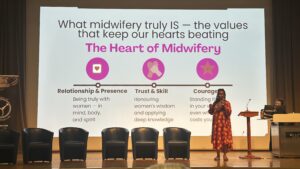
 She named three values that keep that heart beating. Integrity is who you are when nobody’s watching. Authenticity is aligning your values with your actions. Courage is accepting what it might cost you, personally, to do the right thing anyway.
Be the midwife you would want by your side for this sacred rite of passage, she said. Not the midwife the rota needs, not the one the protocol expects. The one you yourself would choose to walk beside you through something this big.
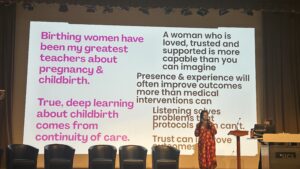
Birthing women, in her words, have been her greatest teachers about pregnancy and childbirth. True, deep learning comes from continuity of care, not from a guideline. A woman who’s loved, trusted and supported is more capable than you can imagine. Presence will often improve outcomes more than medical intervention ever could, listening solves problems protocols simply can’t.
THIS is the philosophy I try to bring to every single woman, an family I work with.
A history of shame and medicalisation
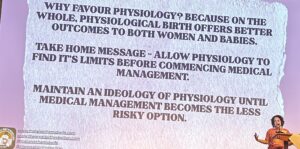
 Melanie Jackson gave the other talk I can’t stop thinking about, and she didn’t soften any of it.
She named the shame directly: “don’t let anyone shame you into believing your body can’t be trusted with physiological birth. If we feel ashamed, she said, physiological birth becomes extinct, because shame is exactly what stops us speaking up for it.”
WHATCH A SNIPPED OF HER TALK HERE – THIS IS ABSOLUTE TRUTH
She walked us back through history too: for hundreds of years, men have headed the medicalisation of childbirth, telling women that man-made intervention is better than anything their bodies could do alone. That pattern hasn’t really stopped, it is taking over.
The rhetoric we hear now is that physiological birth is hurting women and babies.
The truth, backed by women, by midwives, and by actual research, is the opposite: prioritising physiology enhances safety, for women and for their children.
The numbers behind the shift
If you want to see what all of this actually looks like, here it is.
Twenty years ago, England had one of the lowest caesarean rates in Europe. Now it has the highest, having overtaken every single country on the chart, including Italy and the USA, both of which have actually come down over the same period.
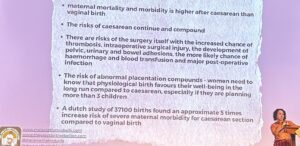
Around 27% of births in England were by caesarean in 2014 to 2015. By 2024 to 2025, that figure had climbed to 45%. Spontaneous labour, birth that starts and unfolds on its own, fell from 59% to 42% over those same ten years.
Despite all of that intervention, maternal mortality in England hasn’t improved. It’s gone up. From 8.8 deaths per 100,000 maternities in 2017 to 2019, to 12.8 deaths per 100,000 by 2022 to 2024. Not to mention the level of TRAUMA (bigger and smaller trauma, but who are we to classify it?)
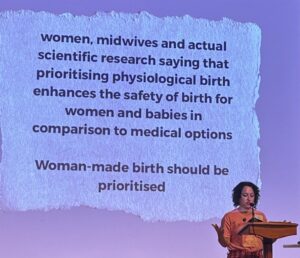
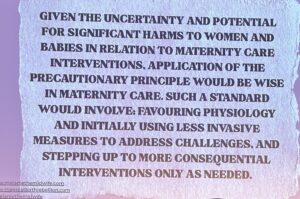
More intervention. Worse outcomes. Sit with that for a second.
This is exactly why a national investigation into maternity and neonatal care, led by Baroness Amos, is underway right now. The early findings describe a postcode lottery of care, a lack of accountability, and women and families who feel unheard. There are already more than 700 recommendations sitting from previous inquiries into maternity safety, almost none of them have been acted on.
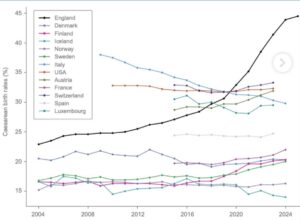
This isn’t a story about individual midwives or doctors failing women. It’s a system that’s drifted further and further from physiology, while telling women all along that the drift was for their own safety. but the data tells a different story.
Why this matters to you
I know you’re here because you want change, you want to see it, and you want to feel it, in your own care.
Can I tell you something about that word, satisfactory? In research on birth outcomes, satisfaction is one of the measures used, a box to tick, a line on a survey. But you deserve to want more than a satisfactory birth. More than an outcome that just ticks the box marked acceptable.
My goal for you has never only been a satisfactory outcome. It’s for you to have something that changes you, something you carry with you for the rest of your life. My clients have felt exactly that, maybe you did too, in your own birth. I really hope this is true for you, and I hope it can be true again.
What I want for you is something like this:
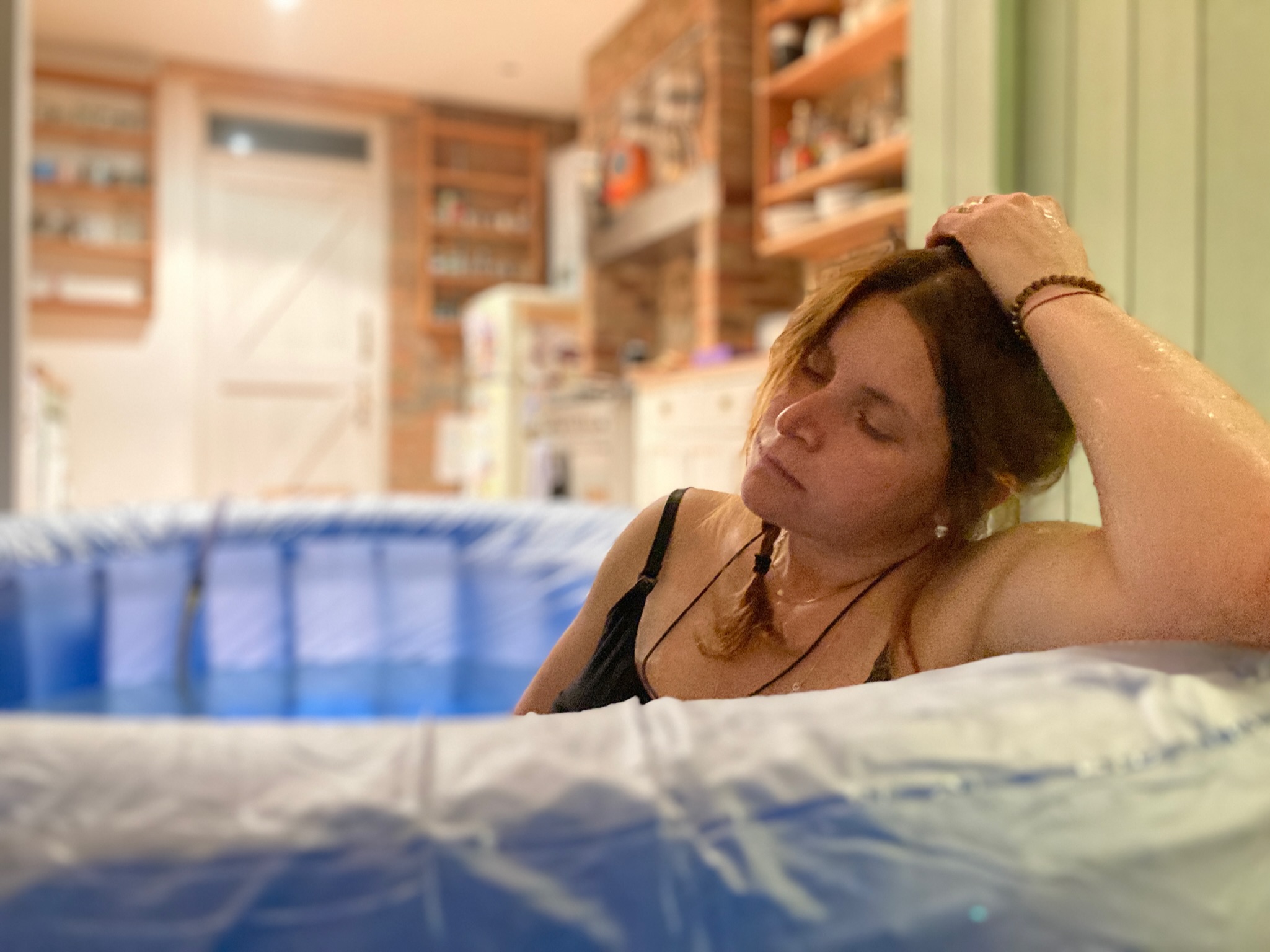
“The most intense, incredible, euphoric, challenging, wonderful, mindblowing, tiring, empowering, phenomenal, magical experience. @imogenhorton
That room reminded me why I do this work. There are women, midwives, and fifty years of history standing behind physiological birth.
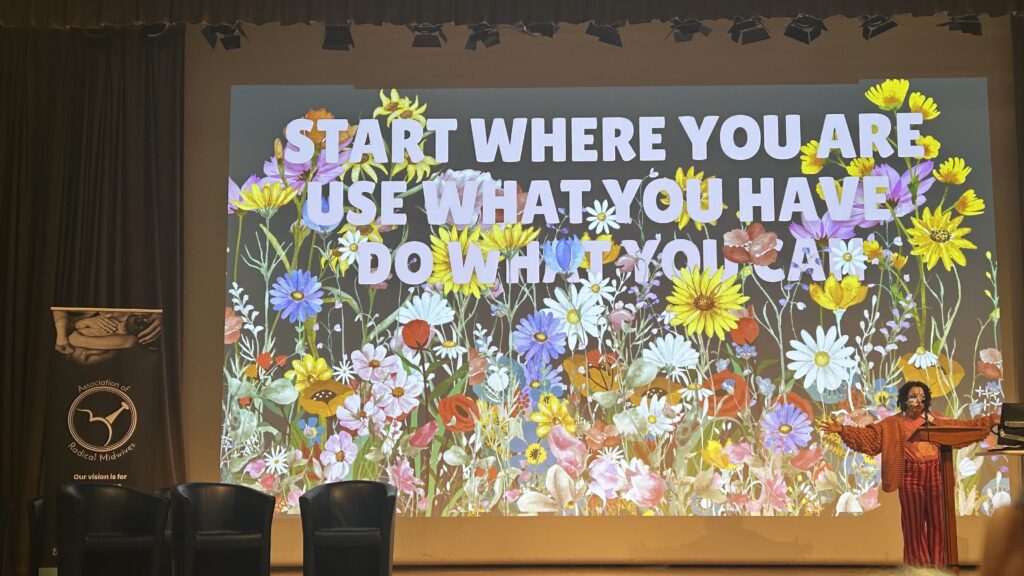
The final slide of the conference has stayed with me as much as anything else from that day. Start where you are. Use what you have. Do what you can.
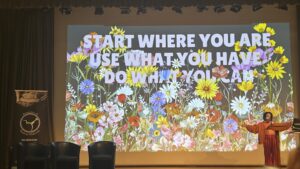
That’s the work, really, not waiting for the system to change before we change anything ourselves. Just showing up, again and again, with whatever we’ve got, the way a handful of student midwives did fifty years ago.
If the body can hold trauma, it can also hold medicine, wisdom, and the power to heal.
RESOURCES:
- Dr Melanie Jackson’s work and the Great Birth Rebellion podcast has great episodes and respurces for your pregnancy and birth journey, i would check this put to hole you making TRULY informed choices: melaniethemidwife.com
- Kemi Johnson’s work: kemibirthjoyjohnson.com
- Leah Hazard’s books and writing: leahhazard.co.uk
- Lola Ornato’s work: emilola.co.uk
- The Association of Radical Midwives: midwifery.org.uk