When you find out you’re pregnant, one of the first questions is often: what happens now? Here is what your antenatal appointments look like through pregnancy, what each one is for, and how care feels different when you have one midwife who knows you.
How many antenatal appointments will I have?
If this is your first baby, as part of your NHS midwifery care, you’ll usually be offered around ten appointments. If you’ve had a baby before, it’s usually around seven. You’ll also be offered two scans, and like every test in pregnancy, they are a choice, not a requirement. You may be offered more appointments depending on your risk factors, for example if you have a medical condition, have had a previous complication or loss, or need extra support.
Your appointments at a glance
The schedule below is what the NHS offers, based on the NICE guidance for antenatal care. Each NHS Trust also has its own local guidelines and policies, so timings and what’s offered can vary a little depending on where you live. This schedule is for a low-risk pregnancy. If, at your booking appointment, you’re identified as having more risk factors, you might be offered more appointments, see a consultant, have extra scans, or be referred to other specialist services as part of a wider team.
Around 8–10 weeks: your booking appointment
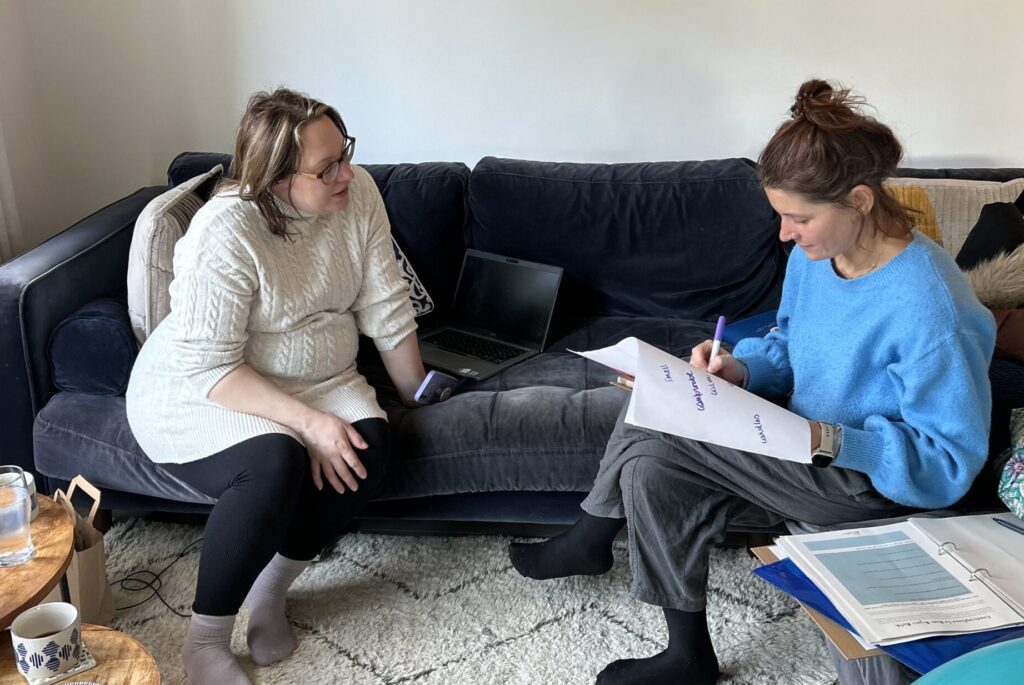
This is the longest appointment, a chance for your midwife to really get to know you. You’ll be asked about your health and medical history, any previous pregnancies and births, and your family history, for example whether certain conditions run in your family. Your height and weight are noted, and your blood pressure and urine are checked.
You’ll also be asked some routine questions about your emotional wellbeing and your safety. Your midwife will ask how you’re feeling, whether you’ve experienced anxiety, depression or other mental health difficulties before, and what support you have around you. You’ll also be asked whether you feel safe at home, and your midwife may ask to see you on your own for part of the appointment so you can answer freely.
These questions aren’t a formality. Pregnancy and the early months with a baby are one of the most vulnerable times in a woman’s life. Up to one in five women experience mental health difficulties during pregnancy or after birth, and for some women, abuse at home begins or gets worse during pregnancy. That’s why these conversations matter so much, and why they should feel normal rather than something to hide.
If you tell your midwife you’re struggling, it opens doors. There are specialist perinatal mental health teams and specialist midwives who can support you, and help can be put in place long before your baby arrives. If you don’t feel safe at home, your midwife can help you make a plan and connect you with services that can keep you and your baby safe.
If you’ve booked with your NHS Trust, this is usually when your booking bloods are taken. These look at:
- your blood group and rhesus status, and whether you carry any antibodies that could affect your baby
- a full blood count, to check for anaemia
- screening for infections such as HIV, hepatitis B and syphilis.
- screening for sickle cell and thalassaemia, inherited blood conditions you could pass on to your baby
The booking appointment usually lasts about an hour. Your midwife will also talk with you about how your baby develops, staying healthy in pregnancy, including vaccinations and reducing the risk of infection, and taking vitamin D and folic acid. You’ll talk about your options for where to give birth, and when to call if something doesn’t feel right, such as bleeding or tummy pain. You’ll be given your maternity notes, on paper or digitally, and you’re entitled to free prescriptions and NHS dental care during pregnancy and for a year after your baby is born.
Around 11–14 weeks: your dating scan and combined screening

The dating scan confirms your due date, checks your baby’s heartbeat and shows whether you’re carrying more than one baby. If you choose combined screening, the sonographer measures the fluid at the back of your baby’s neck, called the nuchal translucency, and you have a blood test. These results are combined with things like your age, your weight and whether you smoke to estimate the chance of your baby having Down’s, Edwards’ or Patau’s syndrome.
The measurement has to be taken by 14 weeks, and sometimes it isn’t possible because of how your baby is lying. In that case you’ll be offered the quadruple test, a blood test up to 20 weeks that screens for Down’s syndrome only and is less accurate.
No screening test is 100% accurate. A result tells you whether the chance is higher or lower, and if it’s higher, you can choose whether to have a diagnostic test.
You can also choose NIPT, which stands for non-invasive prenatal screening testing. It’s a simple blood test from your arm that picks up tiny pieces of your baby’s DNA in your bloodstream, and it screens for the same three conditions. NIPT is much more accurate than the combined test, correctly identifying more than 99 in every 100 affected babies compared with around 82, and it’s far less likely to give you a worrying result when everything is actually fine. You can also choose to find out your baby’s sex.
Like the combined test, it’s a screening test rather than a diagnosis. You can have NIPT privately at home from 10 weeks, once a scan has confirmed your dates, and I can come to you to take the sample (read more about NIPT here).
16 weeks
Your second appointment. Your midwife will check your blood pressure and test your urine for protein, which is done at every appointment from now on to screen for pre-eclampsia, and you’ll go through the results of your booking bloods. If you’re anaemic, you’ll talk about iron supplements, and if you’re rhesus negative, you may be offered a test to check your baby’s blood group. It’s also a good moment to talk about how you’re feeling emotionally.
Around 18–21 weeks: your anomaly scan
Often called the 20-week scan, this is a detailed look at how your baby is growing and developing, and it can be a really special moment of seeing your baby more clearly. The sonographer checks your baby’s body, heart and brain, and looks at where your placenta is lying. Sometimes the sonographer may want another look, for example if your baby wasn’t in a good position, or to see whether a low-lying placenta has moved up later in pregnancy. It’s good to know, too, that a scan can’t pick up every condition.
Around this time you’ll usually be offered the whooping cough vaccine, which helps protect your baby in the first weeks of life.
25 weeks (first baby)
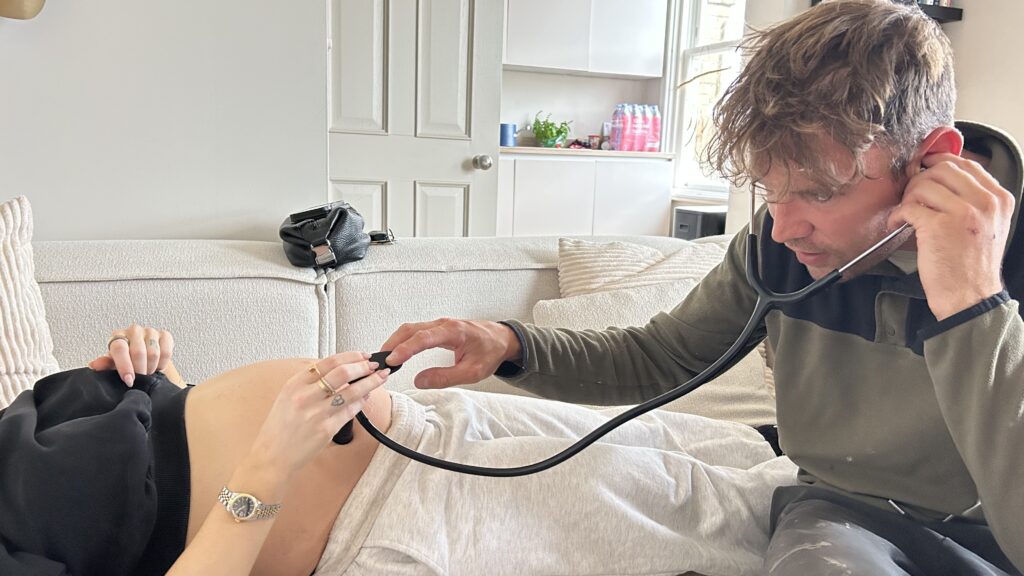
Your midwife will check your blood pressure, test your urine and measure your bump. From now on, your bump is measured at every appointment to check your baby’s growth, and your midwife will talk with you about your baby’s movements. You’ll go through the findings from your anomaly scan together, and your midwife will give you your MAT B1 form, which you’ll need for maternity pay. It’s also a good time to book your antenatal classes.
Around 26–28 weeks
You’ll be offered another blood test to check for anaemia and antibodies. If your blood is rhesus negative, you’ll be offered anti-D at around 26–27 weeks. If you have a higher chance of gestational diabetes, this is also when you’ll be offered a glucose tolerance test, and Dr Rachel Reed’s Gestational Diabetes: beyond the label is a thoughtful read if you’d like to know more. In your third trimester you’ll be offered the RSV vaccine, to protect your baby after birth. From now on, going to sleep on your side, including for naps, is the safest position for your baby.
31 weeks (first baby)
Your midwife will measure your bump, check your blood pressure and urine, and go through the results of any tests from your last appointment.
34 weeks
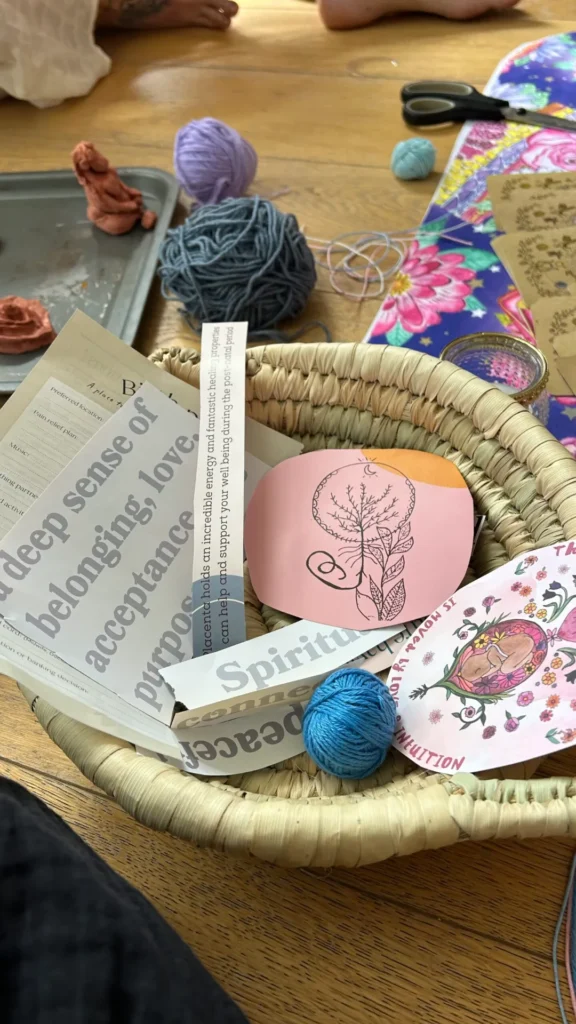
Alongside your usual checks and your baby’s growth, this is when you’ll talk through your birth plan and your options, including where you’d like to give birth, and start preparing for labour, including how to recognise when it has started. If you’re thinking about birthing at home, you can read how to prepare for a homebirth, and Dr Melanie Jackson’s podcast The Great Birth Rebellion is a wonderful companion as you make your choices. In your birth plan you’ll be asked about your options for pain relief, your birth preferences, and how you’d like your placenta to be born.
If you’re planning to birth at home, you can find more about home birth with your own midwife and what to have ready. You can also read about lotus birth and placenta encapsulation. You’ll also begin talking about feeding your baby.
36 weeks

Your midwife will measure your bump, check your blood pressure and urine, and feel for your baby’s position. If your baby is lying bottom or feet first (breech), you’ll talk through your options, which may include an ECV to help turn your baby head down. You’ll keep talking about feeding your baby and the early days together. This is a lovely time to plan your birth space, whether at home or elsewhere.
38 weeks
Your baby’s position is checked again, and you’ll talk about when to call once labour starts. Your midwife will also ask what you’d like to do if your baby hasn’t arrived by 41 weeks.
40 weeks (first baby)
A check-in as you reach your due date. From 39 weeks you may be offered a membrane sweep.
41 weeks
If your baby hasn’t arrived yet, you may be offered another sweep, and you’ll talk through your options, including induction, so you can make an informed decision that feels right for you.
Every test is your choice
Every scan, screening test and blood test in pregnancy is offered to you, and the choice is always yours. You’re entitled to clear information about what each test looks for and what the results might mean, so you can decide what feels right.
It can also help to know that one test can sometimes lead to another. A result, a measurement on a scan, or your weight at booking might mean you’re offered further tests or appointments. For example, a higher BMI may mean you’re offered a test for gestational diabetes, or some extra growth scans later on. Knowing this from the start simply means you can ask questions and make each choice feeling informed.
This is one of the things I love about walking alongside women in pregnancy. We have time to talk through every option together, so you always feel clear and supported in your decisions.
What happens at every appointment?
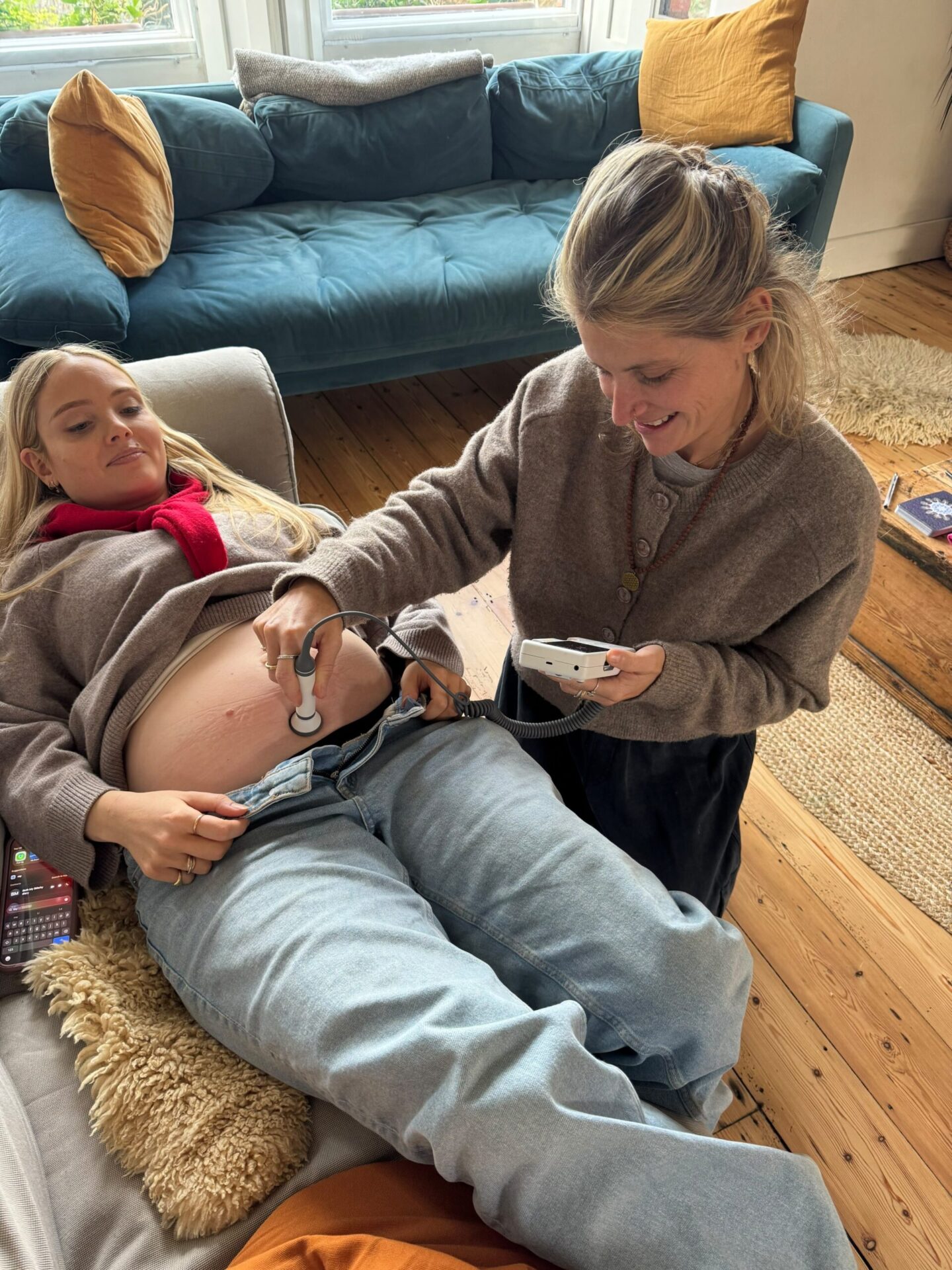
Most appointments include checking your blood pressure and urine, and later on form 25 weeks, feeling and measuring your bump and listening in to your baby if you’d like. Just as importantly, every appointment is a chance to ask questions and talk about how you’re really feeling.
How is antenatal care different with an independent midwife?
I still follow the NICE guidelines, so nothing important is missed, but your care isn’t built around a clinic timetable. It’s shaped around you: your body, your history and what you need at each stage.
Often that means we see each other more often than in standard care, and how often depends on when we start working together. If you come to me early in your pregnancy, we have time to get to know each other gently and build trust well before labour. If you find me later on, we simply see each other more often, so we can still build that connection and prepare together. And between visits, you’re never on your own. You can message or call me, so a worry doesn’t have to wait until your next appointment.
Because our appointments aren’t rushed, there is space to go deeper. We can explore birth mapping together, so you understand your options and feel clear on your choices. We can prepare for your home birth, talk through what your body is doing, and gently look at any fears or past experiences you’re carrying.
You don’t have to have both NHS care and independent midwifery care, but if you choose me, you are still entitled to NHS care. You don’t have to go to your NHS appointments alone either. I can come with you to your scans or doctor’s consultations, be by your side, help you understand what’s being said, and advocate for you, so your voice and your choices stay at the centre. Whenever you need more knowledge, I’ll help you find it, and we’ll talk it through together so the choices you make are truly yours.
And pregnancy isn’t only clinical. It is a threshold, and it deserves to be honoured. That’s why I also offer a Mother Blessing ceremony, a sacred circle with the women who love you, to welcome you into birth and motherhood surrounded by support.

This is what it means to have one midwife walking the whole journey with you: held, heard and truly known. (Why continuity of care matters )
Ready to talk about your care?
If you’d like antenatal care where you feel truly known, book a free exploration call or have a look at my care packages.